Showing posts with label Recipes. Show all posts

Sunday, March 10, 2013

Whole Wheat Biscuits and Gravy

Sorry for the lack of attention you all have been gettin', cold season has struck our area and my poor girls got it! Not that that's the greatest excuse, but hey kiddo's come first!

So that being said I'm keeping it short and sweet. So here is your recipe, in two parts!

Whole Wheat Biscuits
makes about 8

1 cup Sprouted Wheat Flour
1 cup All Purpose Flour
1/4 tsp. Baking Soda
1 tsp. Baking Powder
1-2 tsp Real Sea Salt (to preference)
6-8 tbsp Butter (to preference)
1 cup Buttermilk

Combine dry ingredients in a medium bowl.
Cut in butter until crumbly
Mix in buttermilk until just combined, not too much!
Turn dough onto a lightly floured surface.
Gently pat into a circle and cut out your biscuits (I use a cup)
Place on a cookie sheet in a 425-450 degree oven for 15 minutes until lightly browned.

Whole Wheat Gravy

1/2-1 lb Pork Breakfast Sausage
2 cups of Milk
1/2 cup of Cream
1/4 cup Whole Wheat Flour
1 tsp. Salt (or to Taste)
1 tsp. Pepper (or to Taste)

Brown Sausage in a pan.
Add your Flour mix it in to the grease.
Add your Milk and Cream
Mix in your Salt and Pepper.
Stir over medium heat until sauce starts to thicken.
Keep on low until ready to serve.


Top your biscuits with the gravy (and even some cheddar cheese if you are so inclined) and serve to your hungry hungry brood. Yes even my 8 month old eats it!

Enjoy!

Monday, December 3, 2012

Sprouted Wheat Pancakes and Berry Syrup


It's recipe time!
I've been experimenting with buttermilk pancakes for a few months now and I think we've finally hit a recipe that tastes good and has the healthy aspects we like. . . And if you top it with yummy berry syrup, it makes an awesome breakfast!


Sprouted Whole Wheat Pancakes

1 1/4 Cups Sprouted Whole Wheat Flour
1/4 Tsp. Sea Salt
1/4 Tsp. Baking Soda
1-3 Tbsp. Honey (to sweetness preference)
1 1/3 Cup Buttermilk
1 Egg
2-3 Tbsp. Butter- Melted

Mix together Flour Salt and Baking Soda in a medium bowl. Drizzle with Honey. In a seperate container beat together Egg, buttermilk and butter (make sure the butter isn't too hot!). Mix together and drop by 1/4 cup (or smaller if you prefer, I make "baby" drip pancakes for the kiddo) onto a hot greased skillet or griddle. Once the top is slightly "bubbly" (see photo below) flip them, they should be perfectly browned on the bottom. Cook until the two sides match. Top with Syrup (Berry recipe below) and whip cream or butter.

Berry Syrup/ Sauce

1/2 cup- 1 cup Berries
a touch of water
3 Tbsp Honey or Maple Syrup per 1/2 cup of berries

Simmer on Medium-Low until pancakes are ready and berries are soft.


Pancakes are definately a favorite breakfast around here!

Thursday, November 15, 2012

Banana Ice Cream

Pictures to come next time I make this stuff . . .  :o)

Ok, to be fair calling this stuff ice cream isn't exactly right, cause it's not. But it's good and cold and healthy and my kiddo eats this as her ice cream . . It has no added sugars, fats, or preservatives and is loaded with nutrients so it fits into my standards for her health diet.

You ready? Ok those bananas on your counter, peel them and throw them in the freezer. The more ripe the banana the more banana flavor to have less bananayness freeze them a little on the green side.

Once they are frozen chunk them into your blender.
Sprinkle with unsweetened cocoa powder or vanilla if desired (I use about 1/2 tsp per 3 bananas)
Splash with milk and blend to desired consistency adding milk as necessary.

That's it! Easy Peasy Lemon Squeezy! Enjoy with the kiddo's or pop in the freezer and store for later like you would traditional ice cream.

What kind of natural and healthy desserts do you feed your kids? Do they enjoy them as much as traditional dessert?

Monday, November 5, 2012

Our Favorite Oatmeal

This oatmeal is warm and tasty and it's a fall favorite of ours. It seems like there are so many oatmeal recipes, but this one is by far our favorite.

1 cup boiling water
1 cup Milk
1 1/2 cups Rolled Oats (or Quick Oats)
1/3 cup cranberries
1/3 cup chopped nuts (we usually do almonds)
1/3 cup or less brown sugar (sweetened to taste kinda)
A tiny bit of maple syrup

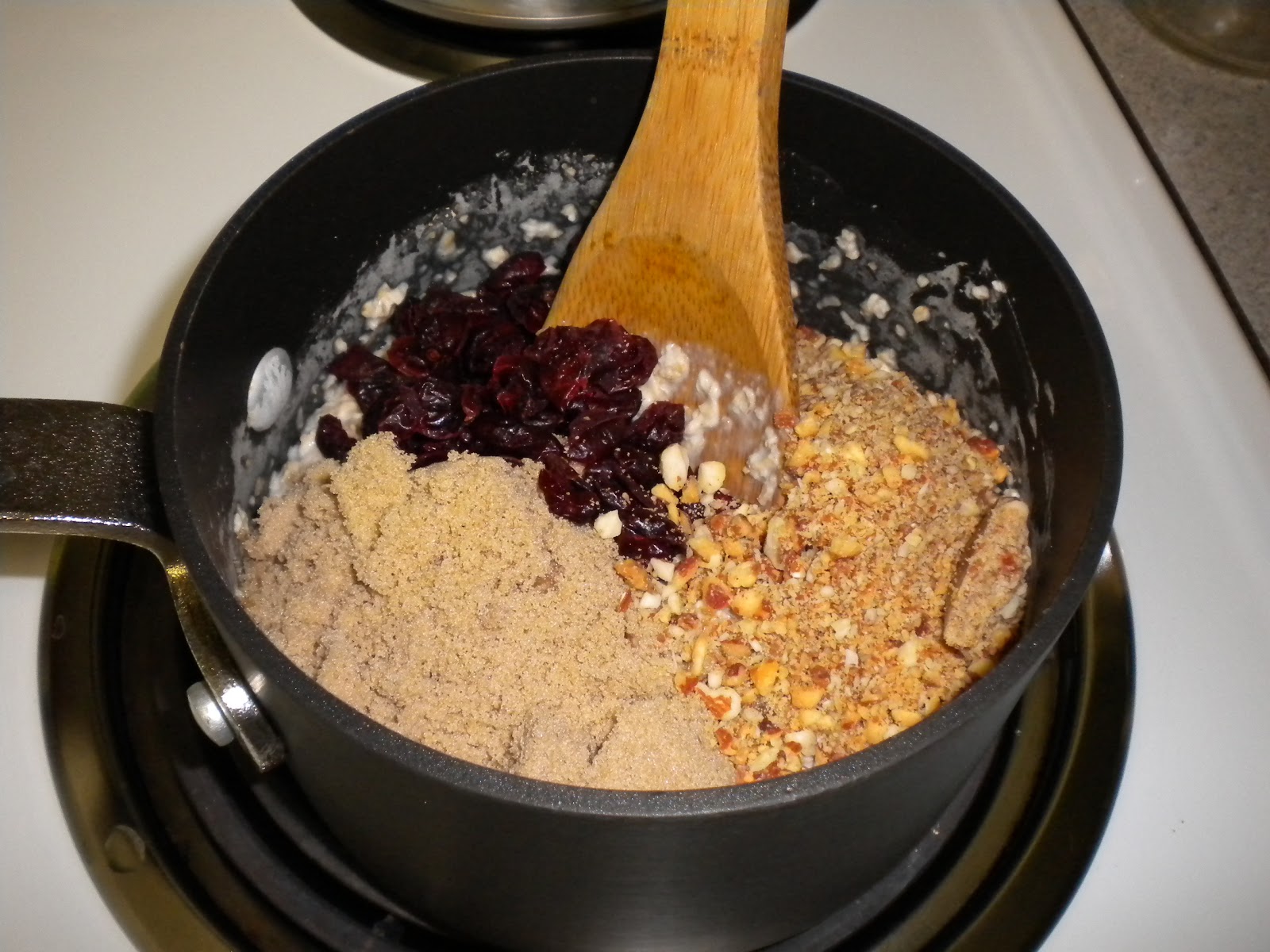
It's an easy peasy recipe this recipe I make. Boiling water in pot, add milk. stir till combined and warm. Add oats. Combine Well. I usually let the oats simmer while I prep the nuts
I then add the nuts berries and sugar. . .

Mix it all together well . . Split between our bowls. . .
Pour on some syrup and enjoy! Simple right?

What are your family's favorite oatmeal recipe's?

Tuesday, October 30, 2012

Excellent Salted Pumpkin Seeds

Ahh! Fall is here, pumpkins, falling leaves, pumpkins, acorn squash, pumpkins, leaf fights, pumpkins, thankfulness; did I mention pumpkins?

We love everything pumpkin around here this time of year, or at least I do. I make pumpkin pie, pumpkin spice latte's, pumpkin cream cheese muffins, pumpkin bread, and pumpkin seeds. Oh there are a million more recipes, but these are by far our favorites. While I will most likely post more about the other recipes later on, today is about the seeds.

Aside from storing them for planting next summer, one of the best uses for those seeds after you carve out your pumpkins is a treat for, well, most of the people I know. Salty, buttery, snack pumpkin seeds.

So without further ado here is my recipe for pumpkin seeds

You will need:

1- 1 1/2 cup of Pumpkin Seeds (about two carving pumpkins worth)
1 1/2 tbsp Sea Salt (Divided)
3 tbsp Butter (we use Homemade)
water to fill pot to 1/2 full

A small sauce pot
A Colander (or a lot of patience)
A cookie sheet (with or without tin foil cover)
An Oven or Toaster Oven

Bring 1/2 pot of water to boil. Reduce Heat. Add 1 tbsp of your sea salt. Add seeds. Boil for about 15-20 minutes stirring occasionally.
Drain and rinse your Pumpkin Seeds in cool water (colander is really helpful for this)
Melt your butter into the pot you just used. Add remaining salt to the butter.
Toss your seeds back in the pot and cook on medium low in the salty butter for about 3 minutes.
Dump the whole pot, butter and all onto a cookie sheet, lined with foil makes for easy clean up but isn't necessary. Spread out to approximately single layer.
Pop in the oven at 300 Degrees. Stir about every 10 minutes. Usually it only takes about 35 minutes to get the crispy golden seeds.
Let Cool.
Enjoy!

Boiling the seeds sucks the salty ness into the seeds and makes them a bit more flavorful than if you were to simply rinse them and bake them. We have also done seasoned seeds in the same manner and they turn out just as great! Experiment for yourself!

What kind of pumpkin treats do you like? Have you made pumpkin seeds before? What are your favorite methods?

Saturday, October 27, 2012

Making Sweet Butter


Sweet Butter is one of the easiest things to make, and yet often one of the things most people would rather buy. Although we have no access to Raw Milk right now and therefore no cultured butter, there are still a great deal of benefits to churning (or shaking) butter at home.

When you make it yourself you have the added benefit of knowing exactly what is in your butter. No natural flavors, no added coloring agents (such as Annatto), no added preservatives, oils, or nitrogen and if you trace where your milk comes from you can know that the milk isn't altered and is harvested from naturally raised cows.

Another great benefit is the limited processing allows for fresher butter which means more/better flavor.

If you have a raw milk supplier you can "culture" your cream and make cultured butter adding a great deal more nutritional value to your butter.

and finally .. . Drum roll please . . . . The Buttermilk. . . Oh how you will love the buttermilk! This milk is much better than any store bought buttermilk. Store bought buttermilk is often not buttermilk at all but rather fermented skim milk! http://en.wikipedia.org/wiki/Buttermilk
The buttermilk you get from churning your own butter is by far superior and makes excellent pancakes!

Although there are many methods of churning your own butter at home some using blenders and whisks, some with traditional churns, I've heard of people using stand mixers, we shake our butter.

As we use it quickly we don't usually worry too much about pressing the butter and we usually make it in small batches. This method is cake easy and really doesn't even require too much thought. Our whole family participate! Ok ok enough blabbing are you ready?


Get an empty jar with a tight sealing lid. We use old peanut butter jars most of the time.

Fill your jar 3/4 full of Heavy Whipping Cream (or fresh cultured cream)

Let the jar sit until the cream is room temperature.

Shake the snot out of it! You will notice as you shake that the cream will become very thick (the whip cream stage) and then almost suddenly it will start to clump together and there will be liquid swishing in the jar.

Congrats you have butter. You then just need to separate the butter and buttermilk.


Pour out the milk (save it for your pancakes tomorrow!) and keep shaking. Shake and pour, shake and pour until you can't get much more milk out of the butter.

Refrigerate or freeze both your Butter and Buttermilk. Or just enjoy it on some rolls right away. This butter will last anywhere from 3-6 days in refrigeration. If you need it to last longer you can press more milk out of the butter either using knives and wax paper or a butter press, or even washing the butter with water. We rarely do this as we use what we make quite quickly.

Bon Appetite!

What methods have you tried to make butter? What do you think of fresh butter?

Thursday, October 11, 2012

Simple Honey Wheat Bread


I love bread. Love it. But I have noticed that unless I buy the expensive organic bread I get sick. Like really bad. I think there is something wrong with the conventionally grown flour supply. I buy organic flour myself and the more I switch our grain items to organic the less allergy problems I end up struggling with. I don’t want to go back to having awful allergy problems but paying 4.89 for a loaf of bread is getting crazy!

I have decided to make my own. I mean why not people did it in the old days and I already buy all organic flour. I’ve even heard that soaking grains and baking your own bread is better for you. Although this isn’t a soaked bread recipe I plan to make it that way (or make soaked bread that is similar) soon. Anyways, this recipe turned out really well! Here goes!

2 Cups Warm Water
2 Cups Whole Wheat Flour
1 TBSP Active Dry Yeast
1 TSP Salt
1/3 Cup Honey
1/3 Cup Oil ( I used Olive Oil)
5 Cups All Purpose or Bread Flour ( I have worked  in a little more wheat flour alternatively)

Dissolve yeast in warm water. Add honey, and stir well. Mix in whole wheat flour, salt, and vegetable oil. Work all-purpose flour in gradually. I found that I actually had to knead some of the flour in, around cup 4 it starts getting really difficult to work in more flour!

Turn dough out onto a lightly floured surface, and knead for at least 10 to 15 minutes. When dough is smooth and elastic, place it in a well-oiled bowl. Turn it several times in the bowl to coat the surface of the dough, and cover with a damp cloth. 

Let rise in a warm place until doubled in bulk, about 45 minutes.

Punch down the dough. Shape into two loaves, and place into two well-greased 9 x 5 inch loaf pans. Allow to rise until dough is 1 to 1 1/2 inches above pans.

Bake at 375 degrees F (190 degrees C) for 25 to 30 minutes.

Tuesday, October 9, 2012

Homemade Applesauce


You Will Need:
10-12 apples (pick your favorite)
A touch of water
Optional Cinnamon
Optional Sugar or Honey (Unsweetened at home is actually quite sweet usually leaving sweetening unnecessary)
Canning supplies if you intend to can your applesauce for later.


Making applesauce is easy. One of my favorite fall tasks and well whenever we run out of applesauce, which happens often with the little ones that love it!  I used to use Lindsay’s method (Passionate Homemaking) then I moved out of my parent’s house and realized the value of a good blender.
 
My new method for applesauce still preserves many of the great nutrients but works better for people  with cheap (or no) blenders.
I start by peeling and chopping all of the apples, They need to be cubes that will cook well and mash later depending on the smoothness of applesauce you like. Think making mashed potatoes :o)
I put all my chunks in a pot and add a tiny bit of water. If you are adding cinnamon most people say do it after it’s sauce, I say add it now, gives the flavors more time to meld. Turn the pot on to medium heat and stir until the apples begin to soften. If you prefer chunkier applesauce, as soon as the apples begin to soften start mashing or blending if you like smooth applesauce let it boil and cook a little longer.
If you are canning your applesauce (as I do) start your jar sanitizing while the apples cook. Sanitize 4 or 5 2cup (pint I guess?) jars for larger apples 1 or 2 jars for smaller apples.
Once the apples reach the softness of your choice, transfer the mixture to your second rate blender or pull out your potato masher.  Mash or blend your apples to the desired consistency. Your applesauce is done. Enjoy or can for later enjoyment.
Pull your jars out and ready them for the sauce. Fill the jars leaving about an inch of headspace (to the edge of the ring). Process in a boiling water canner for 20 minutes.  Allow the jars to cool on the counter Label and store for later!
Enjoy your applesauce!

Monday, September 17, 2012

Homemade Vanilla Yogurt


Ahh, yogurt, great with fruit or even just by itself. Full of good bacteria and loaded with great nutrients. One dietary need that makes digestion easier, as well as weight loss. It regulates metabolism and generally leads to a healthier you. As adding probiotics to your diet often will. The only problem is that the yogurt you buy in stores is either expensive, full of bad stuff like high fructose corn syrup and preservatives, or both! Making it at home ensures that great benefit, on a budget and without the nasty stuff that almost negates the benefit you would receive. 

I have been experimenting with several methods of making yogurt for quite some time and have developed a method that works for me. Experiment with this and other recipes to find what works best for you! The benefits are definitely worth it!

Really you can make whatever kind of yogurt you want with this recipe, but be aware that leaving out the honey (or maple syrup) makes very sour yogurt!

To begin you will need:

A large pot for sanitizing jars and later incubating the yogurt (I use the bottom half of my pressure cooker)

A sauce pan of pot large enough to hold half a gallon of milk, (I use a 6 quart pot, but really you could use a smaller pot, I make 2 quarts (half a gallon) at a time)

a thermometer that will measure as low as 100 degrees Fahrenheit and up to at least 180 degrees Fahrenheit (I am told you can use your own judgement, but this really is much easier with the thermometer)

2- quart sized mason jars or 5- 2 cup mason jars to store your yogurt. (you can use other storage means, however glass seems to work best as you can sanitize it easily and it can be used for everything, incubation and storage)

1/2 gallon of milk

1/2 cup to 1 cup honey or maple syrup

1/2 ounce of vanilla

Yogurt Starter (can be either freeze dried starter like I used today or 1/2 cup of plain cultured yogurt either from a  previous batch or from the store)

About an hour and the ability to check on your yogurt throughout the day.

Lets begin:


Put your milk, honey or maple syrup (sweetened to your preference), and vanilla into your saucepot and turn the temp to medium- medium high.
Keep stirring your milk and check the temperature often, it needs to be 180 degrees, at this temp it will start to form a film on the sides of the pot and it is almost boiling.

In the meantime, fill your incubation pot with hot water and place in your jars. Bring this pot to a rapid boil. (I usually put my lids in as well, but this isn't necessary as you aren't actually canning these) Boil your jars for about 5 minutes and then drain the jars (not the pot) and turn them upside down on a towel to dry. Turn the heat off on your incubation pot (you may even need to add a little cold water before incubating your yogurt).

Once your yogurt reaches 180 degrees, Turn off the heat and remove 1-2 cup of milk from the pot. Divide the remainder between your incubation jars. Now all of these jars and your removed milk needs to cool to about 120 degrees.


At 120 degrees you will mix in your starter. Take your 1/2 cup of yogurt or 10 ml of freeze dried starter and add to the milk you set aside. Don't mix this too much! you will just need to stir enough to wet the freeze dried or mix chunks into the milk. I usually use a smaller mason jar and cap it and shake gently once or twice.


 You will then divide this milk between your incubation jars. Make sure there are a few chunks of starter in each jar.
Cap your incubation jars and turn them upside down (and back up) twice.

Make sure your incubation pot's water is at 120 degrees or less. Too hot and the cultures will deactivate and you will end up with soupy yogurt. Once to temp, put your yogurt in the incubation pot.
You will now leave it there, alone. . don't disturb your yogurt for several hours. You will want to periodically check the water to be sure the temp stays in between 85-110 degrees. You can turn the stove on to heat the water when needed. Keep the water warm for the entire incubation time which is anywhere from 4 hours up to 18 hours, I used to leave it over night, but the water would cool making the time pointless, I now leave it for 8-12 hours depending on my schedule.
That's it, once your incubation is done you should have thick creamy yogurt, better than you could get in the store! Put it in your fridge and enjoy it!


Happy Feasting!

Stephanie